
Australians love live music, and two thirds of young people aged 16-25 say it matters to them, yet they’re being priced out with three-in-five naming cost as a significant barrier to attend events.
Creating a platform for young people to access live music gigs easier, safer and cheaper is the way to unlocking Sydney’s music scene for the next generation.
MyGigPass is a venue-led response to connect 18–25-year-olds with affordable live music across Sydney and NSW. Participating venues work together to promote each other’s shows and offer youth-accessible pricing including free entry, two-for-one deals or custom offers.
Almost everyone would have used a public toilet at some time in their life, and the experience was most likely memorable – but probably not in a good way.
Redesigning public toilets from the inside out, imagining them as premium and inclusive environments where people feel safe and at ease will contribute significantly to improved public wellbeing.
We have the opportunity to turn public toilets into the jewel in local councils' crowns, but first we must invest more time, money and thoughtful design to ensure they meet the needs of all Sydneysiders.
Urban water systems are largely hidden underground, moving across the city through pipes and disconnecting communities from the natural water cycle.
Historically, ‘hard infrastructure’ has been prioritised over ecological processes, resulting in systems prioritising efficiency over resilience.
'Daylighting' - surfacing and re-naturalising urban water systems - slows, spreads and sinks water through landscapes; reducing flood peaks, improving water quality, recharging groundwater and enhancing habitat.
Sydney faces a crisis – chronically unaffordable housing costs the city $10 billion every year.
But despite pulling out all the stops to deliver more housing, we still mandate car parking in new housing developments, a significant tax on the price of a unit.
Removing parking reduces construction costs whilst improving the speed to market of critical housing, creating a blueprint for future developments.
This concept would spark a virtuous circle of better mobility and sustainability, with more effective investment in public and active transport that decreases car dependence in dense urban areas.
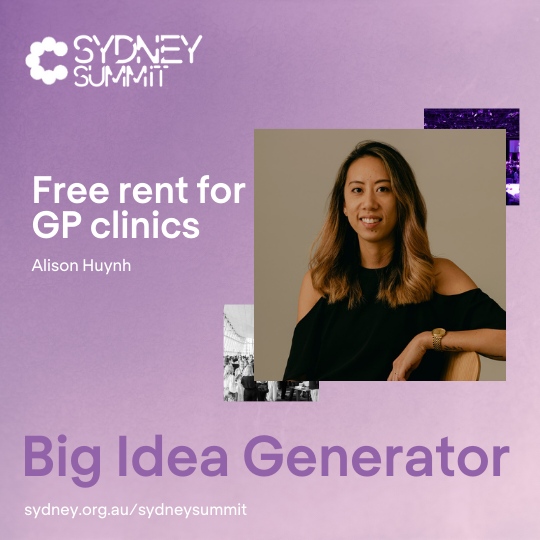
Sydneysiders deserve reliable, accessible and affordable healthcare close to where they live and when they need it, but the GP system is under pressure.
Many communities now find it harder to get affordable, timely appointments – and with less access, emergency departments see more preventable conditions and delayed presentations – increasing strain on the system and leading to more intensive, costly care.
The idea is simple: create a planning incentive that encourages developers to include small, well-designed GP clinics in new apartment or mixed-use developments.Developers would provide these spaces at low or no rent by offering the space to GPs who commit to bulk-billed or low-fee services.
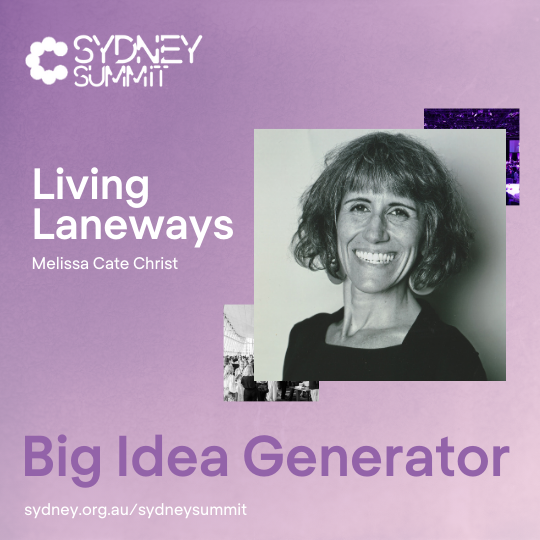
Sydney is in the middle of a housing crisis and the city is in desperate need of affordable housing options close to urban centres.
Greater Sydney has thousands of laneways that are currently underutilised. Fronted primarily by garages or service entries, and often with paving or drainage in need of an upgrade, there's so much that can be done to create thriving ecosystems hidden in the smallest of spaces.
The idea of ‘living lanes’ rethinks back lanes as living places that can provide housing, green infrastructure and social and cultural engagement.
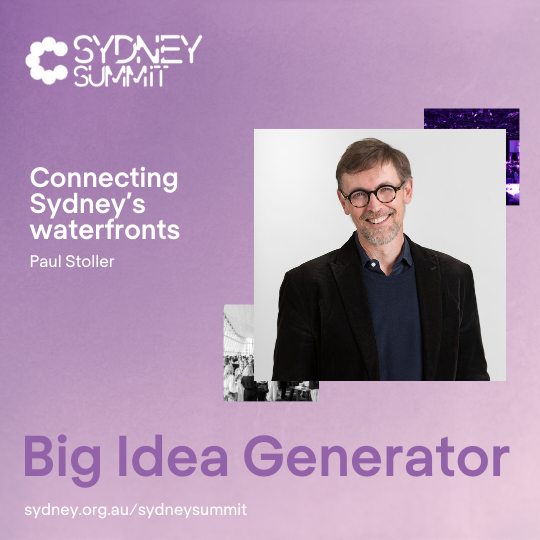
Sydney is a city surrounded by water. Beaches, ponds, creeks and rivers weave through its neighbourhoods and are in use all year round by swimmers, walkers and commuters alike.
Despite this abundance, access to Sydney’s waterfronts is intermittent. Public parks, reserves and foreshores are interrupted by private landholdings that force people to detour inland and abandon the water’s edge completely.
Continuous waterfront access shouldn’t be an exclusive offering but instead a public right. We’re proposing that any time private waterfront property is sold or a development application is granted, an easement on a waterfront strip of land must be granted to the public to enable continuous waterfront access.
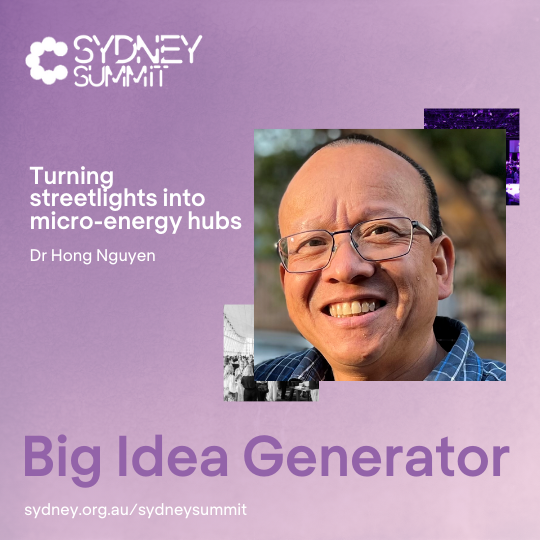
Greater Sydney is experiencing rapid population growth and housing development, putting significant stress on electricity infrastructure and increasing overall power demand.
Current streetlight infrastructure consumes energy but offers no added value beyond illumination. By integrating micro-wind turbines and solar panels into streetlight poles, they can be transformed into distributed renewable energy hubs.
This idea enables us to generate renewable energy right across the city without needing new land or large infrastructure. It also decentralises power generation, reduces pressure on the grid as demand surges and enhances resilience during outages.
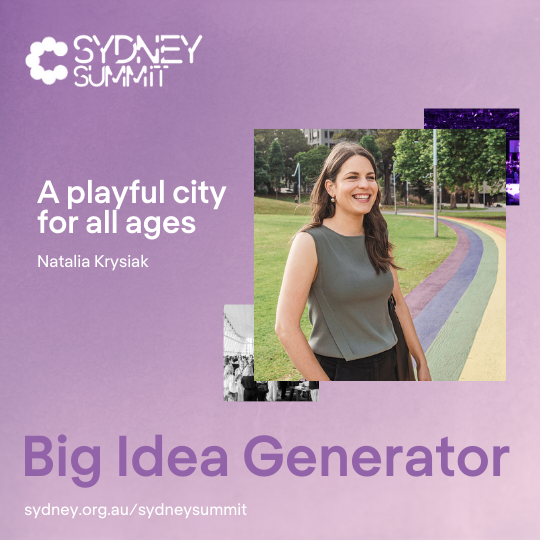
Play – through playgrounds or other activities – is one of the most powerful, yet undervalued, tools we have for building a healthier, more connected and resilient city.
We have an opportunity to transform Sydney into the world’s most playful city, where play is part of everyday life and shared across all ages. This is not just about fun – this is a strategic investment into Sydney’s wellbeing, prosperity and future resilience.
A Sydney Play Strategy would coordinate interventions, ensuring they are scalable, equitable and culturally grounded. By embedding play into public spaces, planning and transport, Sydney can strengthen community bonds, reduce loneliness and create a joyful city where play becomes a shared civic identity.
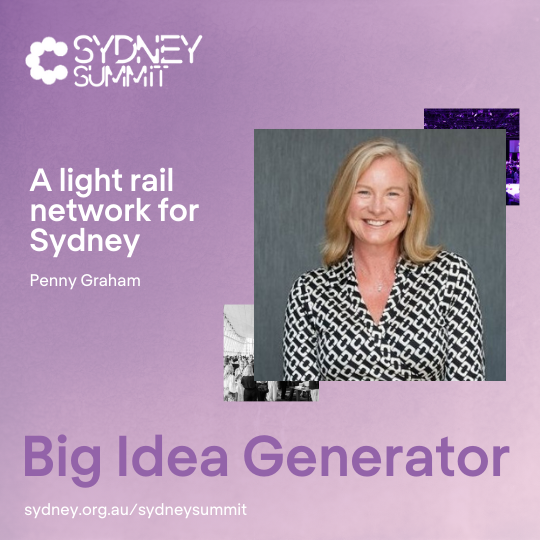
Thinking about how Sydneysiders move today and how they will move in the future, this vision is clear on delivering a light rail network for the city.
This network would include a new line from Central Station to Burwood via Parramatta Road, an extension of the L3 Line from Kingsford Juniors to La Perouse via Long Bay, and an extension of the L1 Line to Green Square and Roseberry.
The next stage of light rail needs to be ‘city-shaping' - support housing delivery, connect workers, deliver economic activity and sustainable transport across Sydney. These three lines could unlock up to 180,000 new homes where people want to live, work and play.
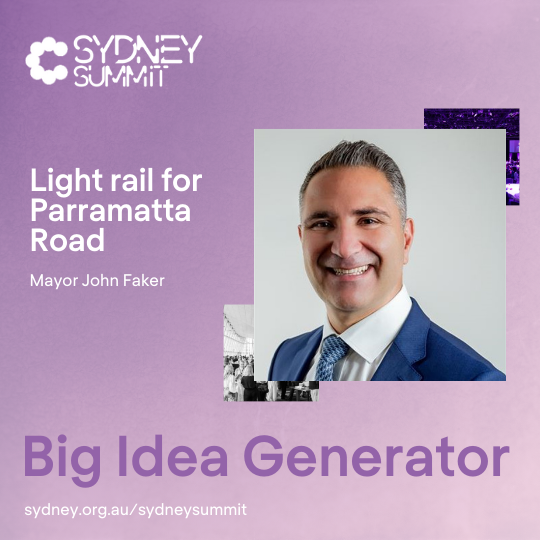
Parramatta Road has long been talked about as a transformative corridor, yet despite decades of studies, its potential remains unrealised.
We have an opportunity to change that and completely open up transport across the city via this vital link.
Light rail is the backbone upon which the new Sydney movement ecosystem will form, with Parramatta Road as the epicentre, unlocking housing investment, invigorating the nighttime economy and connecting students and workers with universities, hospitals and more.
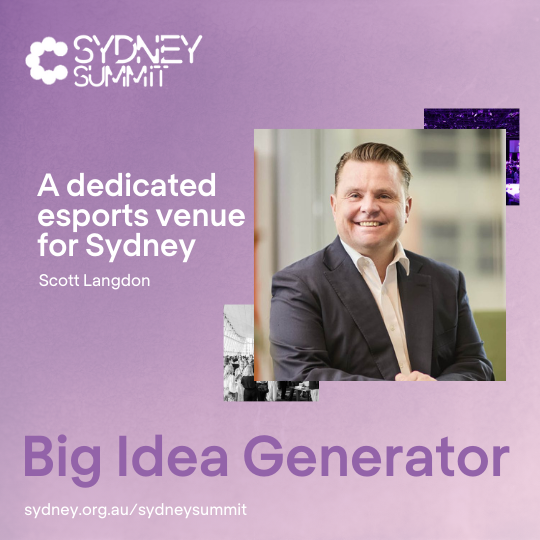
Esport is a global phenomenon, with player numbers jumping each year and marketing revenues projected to generate AU$8.8 billion globally by 2029.
Despite this growth, Australia doesn’t have a dedicated space capable of holding thousands of fans – preventing us from attracting major esport events, investment or talent.
Creating a world-class gaming hub in our backyard would make Sydney the Australasia leader in competitive gaming. Our vision is simple: PlayPort is a stadium and innovation hub dedicated to esports, within an existing venue.
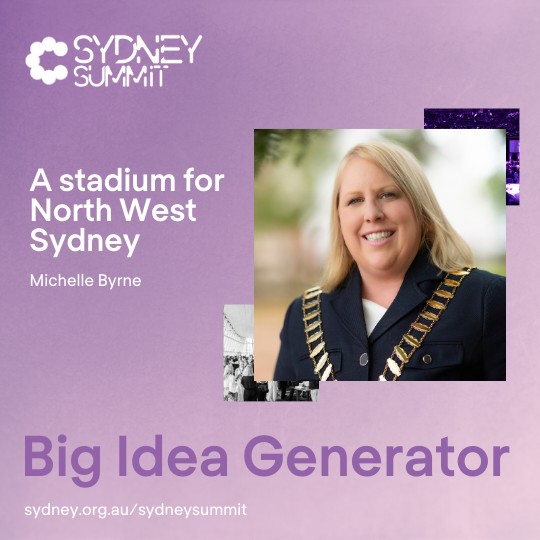
Sydney’s northwest is experiencing rapid growth, with hundreds of thousands of new residents expected to move in over the coming years. Yet, this thriving region still lacks the world-class sporting and cultural facilities enjoyed by other parts of Sydney.
Strategic planning for a future stadium and major event venue would transform the area into the cultural and sporting heart of Sydney’s northwest.
Castle Hill Showground is the ideal location for a future stadium – centrally located, easily accessible via Metro, and already proven as a successful venue for major events in the growing northwest region.
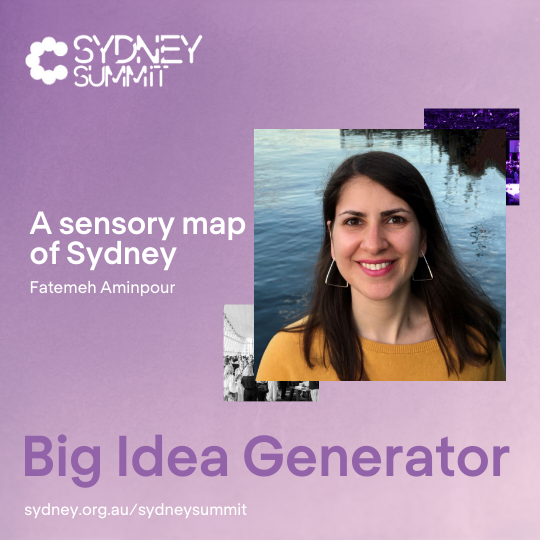
Our city has been designed and built for neurotypical people, even though around one million Sydneysiders are neurodivergent.
These conditions shape the way people experience and interact with their environments, but the design of our public spaces rarely reflect their needs, pushing many to avoid the very places meant to bring people together.
A crowdsourced sensory map that puts the lived experiences of neurodivergent people at the centre could transform how the city is designed and retrofitted. Neurodivergent residents and allies would be invited to flag sensory stressors and highlight safe havens.
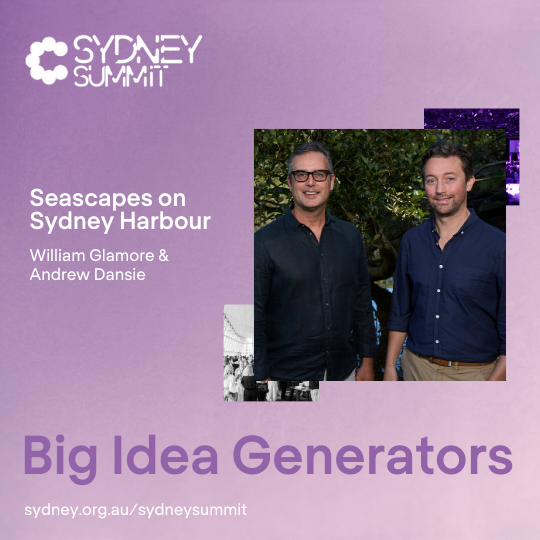
As sea levels increase, water in Sydney harbour will slowly flood coastal foreshores, limiting harbourside access, impacting recreational spaces and inundating built amenities.
So far, the most prominent solution is engineering large concrete flood defence systems that block off the tide and create disconnected and dammed waterways.
Creating a network of floating seascapes on Sydney Harbour will mean foreshore communities can adapt to sea level rises while also providing improved harbourside linkages. Think of these as floating forests that support thriving mangroves and saltmarshes, with public access routes that connect different parts of the harbour and naturally adapt to rising seas.

Power poles and wires are littering local streets. A dated feature in an otherwise modern country, they fail in bushfire and storm events, stop trees from growing in their natural place and almost every neighbourhood built before the 1980s has them.
As energy demand has increased, more overhead infrastructure has been added, and, according to the Australian Energy Regulator, 83% of our nation’s more than 700,000 kilometres of distribution circuit line length is currently crisscrossing overhead.
Undergrounding all low voltage power lines will make Sydney’s energy supply more resilient to climate events, keep streets cooler and greener, reduce risks to emergency workers and take a step towards embracing full-scale electrification.

Greater Sydney sends almost a megaton of food and organics to landfill each year, wasting resources, generating emissions and missing a major soil health opportunity.
While waste diversion programs work well in some areas, many households and apartments – especially those in high-density areas – are hard to reach, and current systems don't suit their lifestyles.
Kerbside communal composting is an opportunity for more accessible, visible and community-centred solutions. It builds everyday habits around waste diversion and helps people become active participants in the food waste cycle